-
MINISTRY OF EDUCATION DOUBLE-DIPPING SAYS EDUCATOR
EVERY year the Education system creates a crisis and economic hardship in the county…..a deliberate crisis.
When parents pay school fees for their children, the objective is that children learn. The function of examination fees is to assess what students have learned. So, why does the Ministry of Education charge a fee for that assessment? It does not make any sense to charge exam fees, it is DOUBLE-DIPPING for government to charge exam fees.
Furthermore, and more critically, should the parents fail to pay this exam fees, then the student does not write and, of course, will not pass to the next academic level. Does the Government not see how it is making Zimbabweans poorer and suffer needlessly? Or does Government not care? Most of all, does Government not realize that it is killing the youth by making their future prospects depend on whether or not their parents are rich enough to pay both school fees and exam fees?
Not too long ago, the teachers who were selected to mark/ grade the exams were made to mark on “gun point”. That was the worst academic environment imaginable. The Education system is being run in a very unprofessional manner even though the Ministers (two of them), have PhDs….. degrees that should make them think.
For this reason, THEUANC party, led by Rev Dr Gwinyai Muzorewa, who is also a professor, will discontinue such inhumane treatment of citizens, most of whom are unemployed.
THEUANC government will offer free quality education and free exam fees. Please note, this is not a campaign for votes but applying common sense where it is lacking, especially when this happens at the detriment of the masses.
Finally, when government cannot pay those who mark the exams, you wonder who “takes” the revenue?
My only plea in this message to the nation, is that the Ministry of Education should NOT double-dip by charging exam fees on top of parents who are struggling to pay school fees. THEUANC government brings an alternative based on common sense and caring for the people.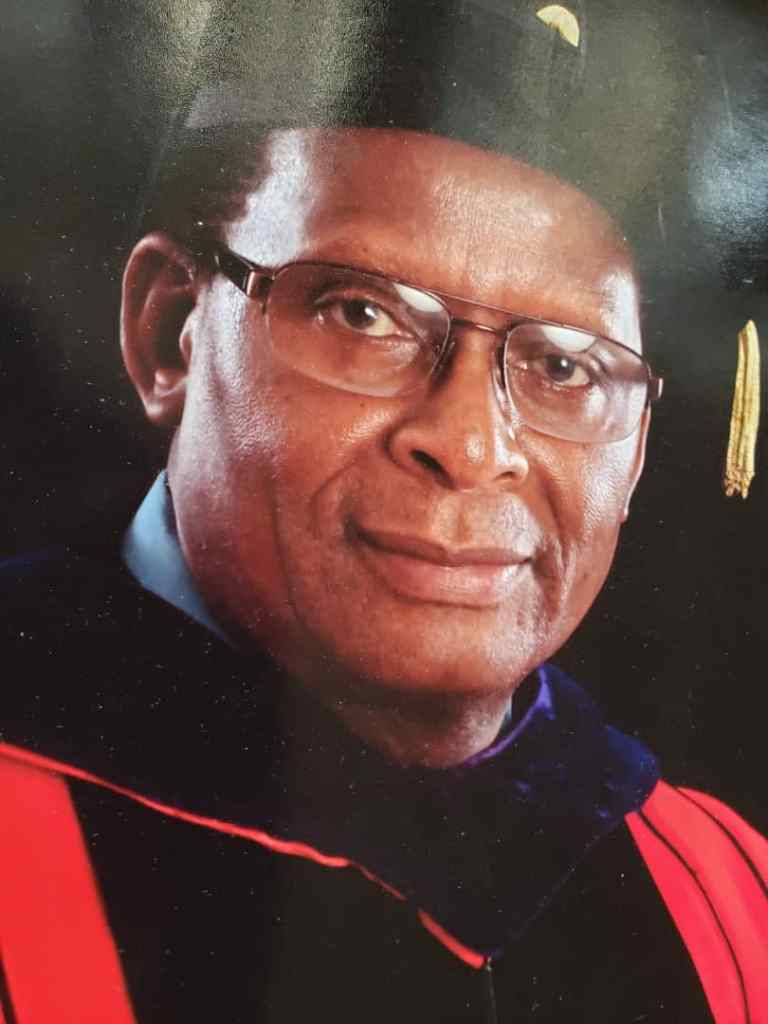
Rev Dr Gwinyai Muzorewa
-
A Brief History Of The UANC Party & The Second Dispensation
by Rev Dr. Gwinyai Muzorewa
PREAMBLE:
A government is the existence of a body that controls , or has authority over a
people. It is a body with the power to make and, or enforce laws to control a
nation. It is based on an organized political party that wins the national elections. Normally, a party has an ideology that influences the government policies. Political parties usually begin as a movement, which makes some demands from the government of its day. For example, THEUANC as it stands today, began as a political movement, seeking real change in their nation’s socio-political and economic situation. THEUANC is one of the oldest and most progressive parties in Zimbabwe. [The other older and more mature parties are ZAPU & ZANU ]In terms of names of major original founders: Dr. Joshua Nkomo, Rev Ndabaningi Sithole, and Bishop Abel Muzorewa. Mr. Mugabe came later, and took Rev. Sithole’s party [ ZANU]. All these political parties as well as the ordinary Zimbabwe citizens
fought for the country’s independence,[ majority rule] one way or another.
BACKGROUND:
1.The country was ruled by a White minority government for a long time [since 1890]. The colonial rulers did not treat Africans as equals, yet the racists whites wanted the country [Rhodesia] to be independent from Britain, the mother colonizer. There was a serious clash on racial discrimination, injustice and segregation. Such racism would not be tolerated by African nationalists. So the liberation war was between White Supremacists and African Nationalists, who were fighting for their human rights as well as political independence. The British were on the fence. On the one hand, they supported the Whites [their kith and kin] , and on the other hand, responding to what Prime Harold McMillan called the “wind of change” blowing all over Africa.
MAJORITY RULE:
2.The people demanded majority rule. Many nationalists were either jailed,
detained or they self-exiled for their own security. Nationalists were jailed or
detained without trial. There came a time when most nationalists were in jail, at Gonakudzingwa or in exile, living the masses at the mercy of the racist Smith regime. That is when the clergy came into active political activism. Led by clergymen like Bishop Muzorewa and Rev Ndabaningi Sithole, the people
declared, “no independence without majority rule”. The White minority rule
succumbed to defeat when Bishop Muzorewa mobilized the whole nation in 1972 to reject the British proposals [ The Pearce Commission]. At that time, the other political parties [ ZANU and ZAPU] were under the umbrella of the UANC. For fear of being arrested, jailed or detained without trial by Smith’s regime, most nationalists operated in exile at that time. At that time, Bishop Muzorewa’s movement was the largest and most popular political force in the country. So when Bishop Muzorewa formed THE UANC, which won the national election by a clear majority [ 51%], he became the First Black Prime Minister of Zimbabwe in April of 1979, during the Internal Settlement. ZANU and ZAPU were fighting from outside, while THEUANC was fighting from within. Smith had hoped that settling with Bishop Muzorewa would settle or end the civil war. It did not because
Muzorewa’s strategy was to get the Whites out of power by any means necessary, but minimizing bloodshed at all cost. A shrewd nationalist/politician does not necessarily display all his/her cards. In his position, Bishop Muzorewa allowed the name Zimbabwe/Rhodesia as a temporary measure toward independent Zimbabwe. The Bishop knew that with the Black majority in Parliament, that would change to Zimbabwe. Even after the Lancaster House Conference, all stakeholders allowed 8 free seats for whites, knowing that the 8 would not pass any law in Parliament by virtue of them being a tiny minority. The presence of majority Blacks in Parliament was a recipe for freedom, power, prosperity and a more just society. Note: all the nationalists were fighting for the same thing – –
political independence.
MUZOREWA IN STATE HOUSE:Muzorewa’s United African National Council [UANC], demanded civil liberties including “One person, one vote”. This was THE UANC’s mantra. It was the only way Africans would be a majority in Parliament and consequently in government.
When the Africans were majority in government [through ACTS of Parliament], Bills that suited the interest of the majority were passed. For example, ACTS of Parliament pertaining to fair Land redistribution, decent salaries for civil servants across racial lines, end of racial discrimination in schools, budgets, residential areas, and government positions, were passed. This symbolized the defeat of White supremacy in Zimbabwe. It was Prime Minister Muzorewa who got Mr Smith out of the State House. Any fighting after that was fighting for position, i.e. which Black man is in power, rather than majority rule, which THEUANC had attained.THE UANC has always been properly constituted to form government but we also value national unity. At one point, we formed a coalition with other parties and assumed the short-lived United Parties [ UP]. Unfortunately, it did not live long due to ZANU PF infiltration. THE UANC, with its good, conventional and progressive liberalist policies, once actually ruled the nation, though for a short period [ April ,1979 to February 1980.] Its record of excellence is still evident in many parts of the country. Housing, multiracialism, decent salaries for teachers, well managed Urban Councils, good strong currency, were all introduced by THE UANC government within six months of its reign. Bishop Muzorewa was not happy being the prime Minister while his sons and daughters were still in the bush. As clergy, he cared more for human lives than a political position. Not many politicians think like that. Such caring leadership has never been matched since.
The Lancaster House Conference attended by all political stakeholders[ Smith, Mugabe, Muzorewa, Nkomo, the British Government] convened in London, from September to December, 1979. They all agreed on a ceasefire. THE UANC decided to go for the harmonized election supervised by the British [Lord Christopher Soames] in order to allow all Zimbabweans, including the freedom fighters, to come home and choose their leader. All stakeholders agreed to a ceasefire in London, not in the bush. A story is told that Mr. Mugabe had wanted to walk away from the negotiating table but was told by President Samora Machel that he had to agree for a cease fire, or else, Mozambique will not continue to host the ZANLA forces. So, the London negotiations ended the war.
Bishop Muzorewa was more committed to having all Zimbabweans participate in these elections as he was with talks. For the record, Bishop Muzorewa had always preferred negotiations than confrontation. Even though he was the Prime Minister at the time, Bishop Muzorewa chose free and fair democratic election, than remaining in power and prolonging the war. For Bishop Muzorewa, national unity and prosperity was better than personal power and self-aggrandizement.
MUZOREWA AND DEMOCRACY:
Bishop Muzorewa was also a pragmatist. All stakeholders including both Dr.
Joshua Nkomo of ZAPU and Mr. Robert Mugabe of ZANU, agreed to allocate 20 special seats for Whites in Parliament. To get what was good for the greatest number, was another one of Muzorewa’s reasonable tactic.
MUGABE IN STATE HOUSE:“Free and fair” elections were supervised by the last colonial Governor, Lord
Soames. At that time, majority rule was at its full throttle. Robert Mugabe won the election, by 57%. Bishop Muzorewa THEUANC lost, but he handled that with the political maturity befitting of a true nationalist… the nation first, then party, then Muzorewa. We are told Bishop Muzorewa actually went to congratulate Mr. Mugabe. The nation welcomed the freedom fighters with a majority yes vote.The transition of power from Muzorewa’s government to Mugabe’s was
smooth, peaceful and orderly because Bishop Muzorewa always believed in
democratic processes. This legacy of unity, peace, integrity, transparency and
accountability, is what THEUANC has been acknowledged for. The national army was formed consisting of Zimbabwe/Rhodesian soldiers, Mugabe’s ZANLA forces and Nkomo’s ZIPRA forces. Once again, unity is strength.
HOW THEUANC [MUZOREWA] WAS DIFFERENT:Note that, the main difference between Bishop Muzorewa’s Premiership and
President Robert Mugabe’s, was that the Bishop’s Government was always guided by the rule of law as provided in the National Constitution. Constitutionality and the rule of law were the guiding principles in Muzorewa’s government. Muzorewa upheld the separation of the Three Branches of government. There was no “jambanja” .Also, the main difference between Mr. Ian Smith and Bishop Muzorewa was
that Smith was a racists [who only cared about white people], while Muzorewa’s leadership was inclusive. He was concerned about all Zimbabweans, [Black, white, Asian, and all ethnic groups], including the Shona and the Ndebele variants. For instance, in his leadership, Mr. Gumede, a Ndebele, was the President, while the Prime Minister was a Shona.Bishop Muzorewa’s Christian and democratic values also played a role in his
national general outlook in politics. Hence his non-violence stance. For this
reason, THE UANC did not participate in electoral politics as long as President Robert Mugabe’s government objected to electoral reforms, which would require non-violence as a condition for legitimacy. Maybe Mr. Mugabe knew that free and fair elections would invariably mean change of government leadership. So he vowed to remain in power even at the expense of national development, peace, unity and prosperity. His wish was fulfilled.
Bishop Muzorewa died in 2010 without seeing the democracy that he had worked for, for so long. Both Mugabe and Nkomo also died without seeing the free Zimbabwe which the nation had hoped for. Smith died after seeing his “prophecy of doom” come true. Today, many war vets are suffering and grumbling that they have not enjoyed the free Zimbabwe that they fought for. Many war vets are now living, in fact, working, in the Diaspora because Zimbabwe is not bearable. They enjoy more human rights in the Diaspora than in their own country. Now, the question arises, who will rebuild the Zimbabwe we want? We the people can.
A NEW DISPENSATION:[THE GWINYAI DISPENSATION]In August, 2017, THEUANC surfaced with the leadership of the Rev. Dr Gwinyai Muzorewa, a brother to Bishop Muzorewa. Gwinyai Muzorewa, is a professor of Systematic theology and Black Liberation movements, at the esteemed Lincoln University, PA. in the USA. He is also an Ordained Minister of the United Methodist Church. Apart from recruiting young people in Manicaland to go to Mozambique in 1976/77, while he was the Student Chaplain at Hartzell High School, Gwinyai was not part of Bishop Muzorewa’s government in 1979 because he had gone back to the USA for graduate studies. But he heard the glory of his brother’s short-lived government.
A former recruiter of the freedom fighters, Gwinyai is now recruiting
technocrats to fight an economic war. The economy of Zimbabwe has gradually and steadily worsened since ZANU PF government took over from THE UANC government. However, both the late Mugabe and the late Bishop Muzorewa did what they did during their time, good and not so good. Now it’s time for economic revival for the nation. This war, like the war against colonialism, is for every Zimbabwean to participate in. We all fought for our liberation in one way or another. Some fed, the fighters, some hid them from the Rhodesia soldiers, others actually pulled the trigger. That is how we all participated in the liberation war. Similarly, now we need positive energy only. It is not time to kill but time to heal. It is not time to throw stones, but time to gather mineral stones together. It is not time to hate, but time to love.[Ecclesiastes 3:ff]. The Holy Book tells us there is time for everything, a season for everything under the sun. This GWINYAI
DISPENSATION is time to build our economy, multi-partisan relations and society. If I may borrow and paraphrase Dr Kenneth Kaunda’s slogan: “One Zimbabwe, one nation.” Dr Kaunda said: every family must have breakfast, lunch and supper.Gwinyai Muzorewa believes, to win this economic war, there is no need for
violence or intimidation because Gwinyai does not seek vengeance or retaliation. Gwinyai does not seek to victimize any Zimbabwean. The rule of law and our zero-tolerance for corruption will pave and chart our path to prosperity. But we just have to create an atmosphere that is politically conducive to economic stability, growth and development. Gwinyai pledges to advance the nation from where his elders [Muzorewa, Nkomo, Mugabe] left it, to a Zimbabwe geared for the future. Unity is strength. Remember, together we won our independence, together we will win this economic war. For Gwinyai, this is not about a position in Government Office, but a national proposition. More than likely, once all the enemies of democracy have been eliminated, the “Invisible Hand’ will direct the economy in an upward trajectory.
THE ECONOMIC WAR:To win this war, if elected, The Rev. Dr. Gwinyai Muzorewa is committed to a
leadership with integrity, accountability, transparency and the rule of law. He
calls the nation to unite in fighting against corruption, state capture, patronage, human rights abuse, absence of the rule of law, regionalism and self-aggrandizement.In order to fight for a noble cause together, we need to first uphold human
rights. We must value human life. The African culture always values human life. Respect for the elderly, care for the children, respect for women and men, all come into play in executing human rights. Human rights is not a western idea. The westerners put it on paper, but we put it in our hearts. The end result is the same, if this value is properly observed and implemented. To say: “Kudza baba wako na Mai wako”, is not a western practice. To honor your parents is not a foreign practice. Ministering to the needy of our community is not a western practice.
THEUANC insists on human rights observance because it is consistent with our culture. Better still, it is now enforced by the law of the land.Rev. Dr Gwinyai Muzorewa believes in the core values of democracy. As a
caring leader my government will provide for the people’s health care needs,
education needs, housing needs, freedom and justice for all. THEUANC will vow to uphold the national Constitution which is designed to meet the aspirations of the people, the people’s rights and privileges. Leadership that does not uphold the Constitution does not respect the people. Nor do the people appreciate it. In a democracy, power resides in the people. Freedom is the module that allows people to govern themselves through representatives who constitute the legislature and are answerable to the electorate.To win this war and in the spirit of national inclusiveness, Muzorewa’s
government will recruit across party lines, technocrats in various fields, including finance, agriculture, education, commerce and industry, economics, science and technology, engineering, IT, national infrastructure, medicine, mining, energy, etc. Equipped with sufficient resources, Zimbabwe will win this economic war. Muzorewa’s government will take the nation to the next level, thereby ushering Zimbabwe into the future where development, peace, prosperity, progressive national agendas and macroeconomic success await us.Finally, to be member of THEUANC is to be cultured, respected, free, honest
and human. Let us always remember that “we are because I am, and because I
am, therefore we are.” We vote for humanity.
-
Subscribe
Subscribed
Already have a WordPress.com account? Log in now.
 The UANC Party